Audits of annual and consolidated financial statements in accordance with the German Commercial Code (HGB) and International Financial Reporting Standards (IFRS) for internationally active medium-sized companies. We coordinate your audit centrally from Germany—with dedicated contacts, experienced audit teams, and local expertise within the PKF Global Network.
German Commercial Code (HGB) & International Financial Reporting Standards (IFRS)
Personalized Partner Support
Auditing Services Tailored to Your Business
Small and medium-sized businesses need an auditor who understands their structures and can keep pace with their growth and increasing internationalization.
At the PKF Wulf Group, we combine personalized service and quick decision-making with the professional and international expertise of the PKF Global Network.
Your assigned auditor remains your primary point of contact. He or she coordinates the audit team, our specialists, and—for international corporate groups—collaboration with PKF firms abroad.
Direct Access Direct communication with the assigned auditors and streamlined decision-making processes.
Understanding Mid-Sized Businesses Pragmatic audit processes and experience with small and medium-sized enterprises and corporate group structures.
International Audits Central coordination of cross-border audits through the global PKF network.
Personalized support. Clear accountability.
Trust is crucial in an audit engagement.
At the PKF Wulf Group, you have dedicated points of contact and direct access to the responsible auditors. This allows key issues to be resolved quickly and decisions to be made without unnecessary back-and-forth coordination.
Even for larger or international corporate groups, the chain of responsibility remains clear: Your point of contact at the PKF Wulf Group coordinates the audit team as well as specialists and international PKF firms as needed.
New Audit Requirement Your company exceeds the size thresholds for the first time or changes its size category due to growth, acquisitions, or restructuring.
First Consolidated Financial Statements Due to investments, acquisitions, or growth, your company is required to prepare consolidated financial statements for the first time—either nationally or internationally.
Change of Auditor You are considering switching from a Big Four firm, another audit firm, or due to a change in corporate structure.
Internationalization New foreign subsidiaries are increasingly transforming a local financial statement audit into an internationally coordinated group audit.
Financing or Transactions Banks, investors, or shareholders require consolidated, reliable financial information—even if there is no legal requirement to prepare consolidated financial statements.
ERP or Finance Transformation New ERP systems, migrations, shared-service structures, or automated processes are changing the requirements for IT audits and financial statement audits.
We audit medium-sized companies and corporate groups both domestically and internationally. We provide personalized service, clear coordination, and an audit approach tailored to your company.
Audit of Annual and Consolidated Financial Statements
Statutory and voluntary audits in accordance with the German Commercial Code (HGB) and International Financial Reporting Standards (IFRS)—for individual companies and corporate groups.
International Auditing
Group audits and international consolidated audits, centrally coordinated by the PKF Wulf Group and supported by local expertise from the PKF Global Network.
Exam-Related Assignments
Audit reviews, special audits, certifications, and other assurance services for specific business issues.
Sustainability Assessment
Audit of sustainability reports and ESG information in the context of the CSRD and ESRS, the EU Taxonomy, or voluntary sustainability reporting.
Reliable financial information requires reliable IT systems and controls. Our IT audit specialists specifically incorporate IT relevant to financial reporting into the financial statement audit.
This includes, in particular, IT general controls (ITGC) such as access permissions, program changes, and backup processes; IT-based process controls in ERP and source systems; and the assessment of IT transformations and system migrations.
We have experience with various ERP systems, including SAP and Microsoft Dynamics.
Whether it’s a change in auditors, growth, or new corporate structures: Let’s discuss, with no obligation, how your financial statement audit should be structured going forward.
Internationally recognized without Big Four structures.
Foreign subsidiaries and different local audit teams can quickly make a consolidated financial statement audit complex.
Our approach is therefore clear: The PKF Wulf Group handles the central coordination of your international audit.
Through the PKF Global Network, we can engage auditors and specialists in 150 countries. We coordinate audit requirements and schedules and consolidate the results for the consolidated financial statement audit.
For you, this means: local expertise in the respective countries, combined with a single point of contact in Germany.
International audit quality that we actively help shape
International audits work particularly well when audit methodology, procedures, and collaboration are coordinated across national borders.
Kevin Kuß is a member of the PKF Audit Identity Steering Committee. Together with auditors from the international PKF network, he works to further develop and standardize audit methodology, procedures, and collaboration in international audits.
This experience is directly incorporated into our international audit engagements.
Is your corporate group internationally active?
We coordinate your financial statement audit across national borders with a central point of contact in Germany and local PKF experts abroad.
Industry Example: Auditing for the Renewable Energy Sector
We audit domestic companies and international corporate groups in the renewable energy sector in accordance with the German Commercial Code (HGB) and International Financial Reporting Standards (IFRS) —ranging from project companies to complex corporate group structures.
Our clients range from publicly traded general contractors to project developers for wind and solar power, as well as battery energy storage systems (BESS) —whether as stand-alone projects or in combination with solar power.
In doing so, we combine audit experience with a deep understanding of the industry’s equity, financing, and project structures.
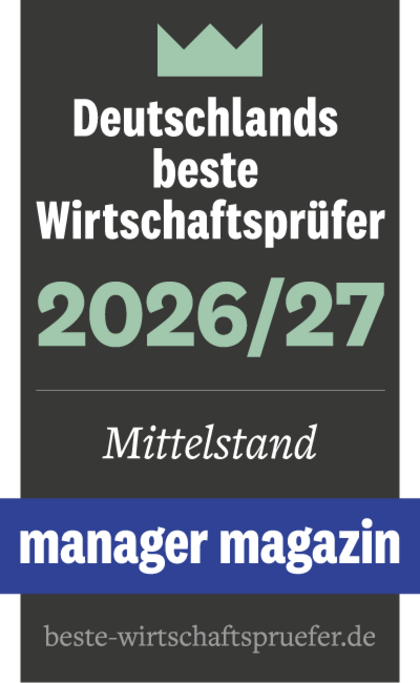
The PKF Wulf Group was named “Germany’s Best Auditor for Small and Medium-Sized Businesses 2026/2027” by *manager magazin*. This recognition is based on an independent study by the Scientific Society for Management and Consulting (WGMB), which analyzes leading auditing firms in Germany.
Receiving this award once again underscores our commitment to supporting small and medium-sized clients with a high level of professional expertise, reliability, and a clear understanding of their individual challenges.
Recommended by clients.
What matters most to us is our clients’ opinion. After all, in addition to professional quality, reliability, pragmatism, and personal collaboration determine how well an audit fits into a company’s day-to-day operations.
We appreciate the team’s dedication, reliability, good collaboration, and pragmatism. Even when faced with difficult and complex issues, we were able to work well with the PKF Wulf Group and find solutions. We are very satisfied with the quality of their work and look forward to continuing our collaboration.
A professional and cooperative partnership based on technical expertise and a human touch.
Openness to solutions tailored to the client and the situation. A high level of expertise at all levels. Pragmatic implementation of solutions tailored to SMEs.
Experienced auditors meet digital tools
For us, digital auditing does not mean replacing experience with technology, but rather combining the two in a meaningful way.
Our auditors and audit teams work with modern solutions such as Caseware, audit.neo, and Auditi, as well as AI-powered applications. Data analysis, digital audit documentation, and automated evaluations help us identify risks more precisely, clearly define audit priorities, and design efficient audit processes.
Professional judgment remains crucial. Our experience, our understanding of your business model, and our personal dialogue with management and the finance department continue to form the foundation of every audit.
Frequently Asked Questions About Auditing
For which companies is the PKF Wulf Group the right auditing firm?
The PKF Wulf Group primarily assists medium-sized companies and corporate groups with audits of annual financial statements and consolidated financial statements.
This includes companies with strong regional roots as well as internationally active medium-sized corporate groups with subsidiaries abroad.
We are a particularly good fit for companies that value personalized service, direct access to the responsible auditors, and quick decision-making processes, while also requiring international audit capabilities.
Through the PKF Global Network, we can engage local auditors and specialists and coordinate international audit engagements centrally from Germany.
When will our company be required to undergo an audit for the first time?
A statutory audit requirement may arise, in particular, when a company grows and exceeds the relevant size thresholds set forth in the German Commercial Code (HGB).
It is particularly important for management and the CFO not to wait until the annual financial statements are prepared to begin the initial audit. Issues such as inventory, opening balance sheet values, processes, internal controls, and required documentation should be coordinated with the auditor at an early stage.
The legal basis for this is set forth in particular in Sections 267 and 316 of the German Commercial Code (HGB).
What should be taken into special consideration during an initial annual financial statement audit?
During an initial audit, the auditor must first gain a comprehensive understanding of the company, its accounting practices, key processes, and IT systems.
From the perspective of management and the CFO, it is therefore advisable to plan the audit well in advance. This allows key accounting and audit issues to be clarified before the annual financial statements are prepared, thereby reducing additional burdens on the finance team.
Particularly for companies with an international presence, reporting structures, foreign subsidiaries, and, if applicable, local auditors should also be taken into account early on.
When do we have to prepare consolidated financial statements for the first time?
An obligation to prepare consolidated financial statements may arise, in particular, when a company acquires subsidiaries, establishes new ownership structures, or as the existing corporate group evolves.
The basic requirements are set forth in Section 290 of the German Commercial Code (HGB).
For management and the CFO, preparing the first consolidated financial statements usually involves much more than mere consolidation: the scope of consolidation, accounting policies, reporting packages, intercompany reconciliations, and timelines must all be organized across the group for the first time.
For international groups, this is compounded by the need to coordinate foreign subsidiaries and, where applicable, local auditors.
When is there no requirement to prepare consolidated financial statements, even if there are subsidiaries?
Not every corporate group with subsidiaries is automatically required to prepare consolidated financial statements.
The German Commercial Code (HGB) provides, among other things, for size-based exemptions under Section 293 HGB as well as additional exemption options for certain group structures.
Particularly following acquisitions or in the case of growing corporate groups, it is therefore important to determine at an early stage whether there is actually an obligation to prepare consolidated financial statements or whether a statutory exemption can be utilized.
Can voluntary consolidation make sense even if there is no legal requirement to prepare consolidated financial statements?
Yes. Especially in cases involving financing, acquisitions, changes in ownership, or growing corporate groups, banks, investors, or shareholders may require or expect consolidated financial information.
Voluntary consolidation can help provide a transparent picture of the corporate group’s financial situation as a whole.
Whether a complete voluntary consolidated financial statement is required for this purpose or whether another form of consolidated financial information is sufficient depends on the specific information needs of the recipients.
How does the audit of an international corporate group work?
In the case of an international consolidated financial statement audit or a group audit, the PKF Wulf Group centrally coordinates the audit of the relevant companies.
Together with the participating audit teams, we coordinate the scope of the audit, material risks, reporting requirements, and timelines. Through the PKF Global Network, we can engage local auditors and specialists in the respective countries.
For management and the CFO, a single point of contact at the PKF Wulf Group remains responsible for coordinating the international audit and consolidating the results for the consolidated financial statements audit.
If we change our consolidated financial statement auditor, do we also have to change our foreign auditors?
Not necessarily.
Existing local auditors may continue to be involved in the group audit under certain conditions. The key factor is that the responsible group auditor must be able to oversee and evaluate their work in accordance with applicable audit requirements.
For companies operating internationally, this means that established local structures do not automatically have to be completely overhauled. The parties should jointly assess which existing audit structures can be meaningfully continued.
When is it a good idea to change auditors?
Changing auditors may be advisable if your company has grown significantly, become more international, or if the current audit services no longer align with the size and complexity of the corporate group.
The desire for dedicated points of contact, direct access to the responsible auditors, more stable teams, shorter decision-making processes, or a more internationally coordinated audit can also be reasons to review your existing relationship with your auditors.
A change should be planned as early as possible so that the audit strategy, timeline, and transition can be prepared in a structured manner.
When might it make sense to switch from a Big Four firm to a mid-sized accounting firm?
Even medium-sized companies with an international presence do not necessarily need a Big Four audit firm.
A change in firms may be worthwhile if experience with international group audits, the German Commercial Code (HGB), and IFRS is still required, but direct access to partners, stable audit teams, and short decision-making processes are given greater priority.
The PKF Wulf Group combines the personalized service of a mid-sized accounting firm with the international capabilities of the PKF Global Network.
Is our company subject to a mandatory rotation policy for auditors?
A statutory rotation requirement does not generally apply to every small and medium-sized enterprise.
Specific requirements apply in particular to entities of public interest, known as public interest entities.
For traditional medium-sized companies, however, there is generally no comparable general requirement to regularly change audit firms.
Regardless of this, it may be advisable to periodically review the existing auditor relationship in terms of quality, efficiency, industry knowledge, international reach, and personalized service.
Does the PKF Wulf Group audit annual and consolidated financial statements in accordance with the German Commercial Code (HGB) and IFRS?
Yes. We audit domestic companies and international corporate groups in accordance with the German Commercial Code (HGB) and International Financial Reporting Standards (IFRS).
For cross-border corporate structures, we centrally coordinate the audit teams involved and can engage local auditors and specialists through the PKF Global Network.
This allows us to combine international audit capabilities with a single point of contact for management and the CFO in Germany.
What role do IT audits and digital audits play in our financial statement audit?
The more financial processes are automated and interconnected on an international scale, the more important IT systems, interfaces, and internal controls become—even for the financial statement audit.
Depending on the system landscape, our audit teams and IT audit specialists incorporate ERP systems, access permissions, automated controls, and system migrations, among other elements, into the audit.
In doing so, we work with modern audit solutions such as Caseware, audit.neo, and Auditi, as well as AI-powered applications.
This technology helps our auditors identify risks more precisely and structure audits efficiently. A deep understanding of your business model and the professional judgment of experienced auditors remain crucial.
How can we tell if an auditor is qualified?
For management and the CFO, audit quality is reflected not only in the audit results but, above all, in the collaboration throughout the entire audit process.
In our view, the key factors are an experienced and stable audit team, direct access to the responsible auditors, clear communication, an understanding of the industry and the corporate group, and the ability to address complex issues at an early stage.
The quality of our work is also recognized externally: The PKF Wulf Group was named “Germany’s Best Auditors for Mid-Sized Companies 2026/2027” by manager magazin.
At the same time, feedback from our clients is particularly important to us—because professional quality, reliability, and pragmatic collaboration determine how well an audit integrates into a company’s day-to-day operations.
What should CEOs and CFOs look for when selecting an auditor?
In addition to professional expertise, the auditor should, above all, be a good fit for the company’s size, structure, and growth trajectory.
For internationally active medium-sized companies, experience with comparable corporate structures, industry knowledge, expertise in the German Commercial Code (HGB) and International Financial Reporting Standards (IFRS), the ability to conduct international audits, and the composition and stability of the audit team are particularly relevant.
Equally important are direct access to the responsible auditor, clear central coordination, and the question of how early key accounting and auditing issues are addressed.
For international groups, it should also be clarified how foreign subsidiaries and local audit teams are integrated into the group audit.
Discuss the audit engagement
Talk to us about your company structure, your needs, and your next financial statement audit.